In 1981, two Japanese designers showed their first collections in Paris. The press called it "Hiroshima chic" — derisively, as if it were a problem. The collections were full of black.
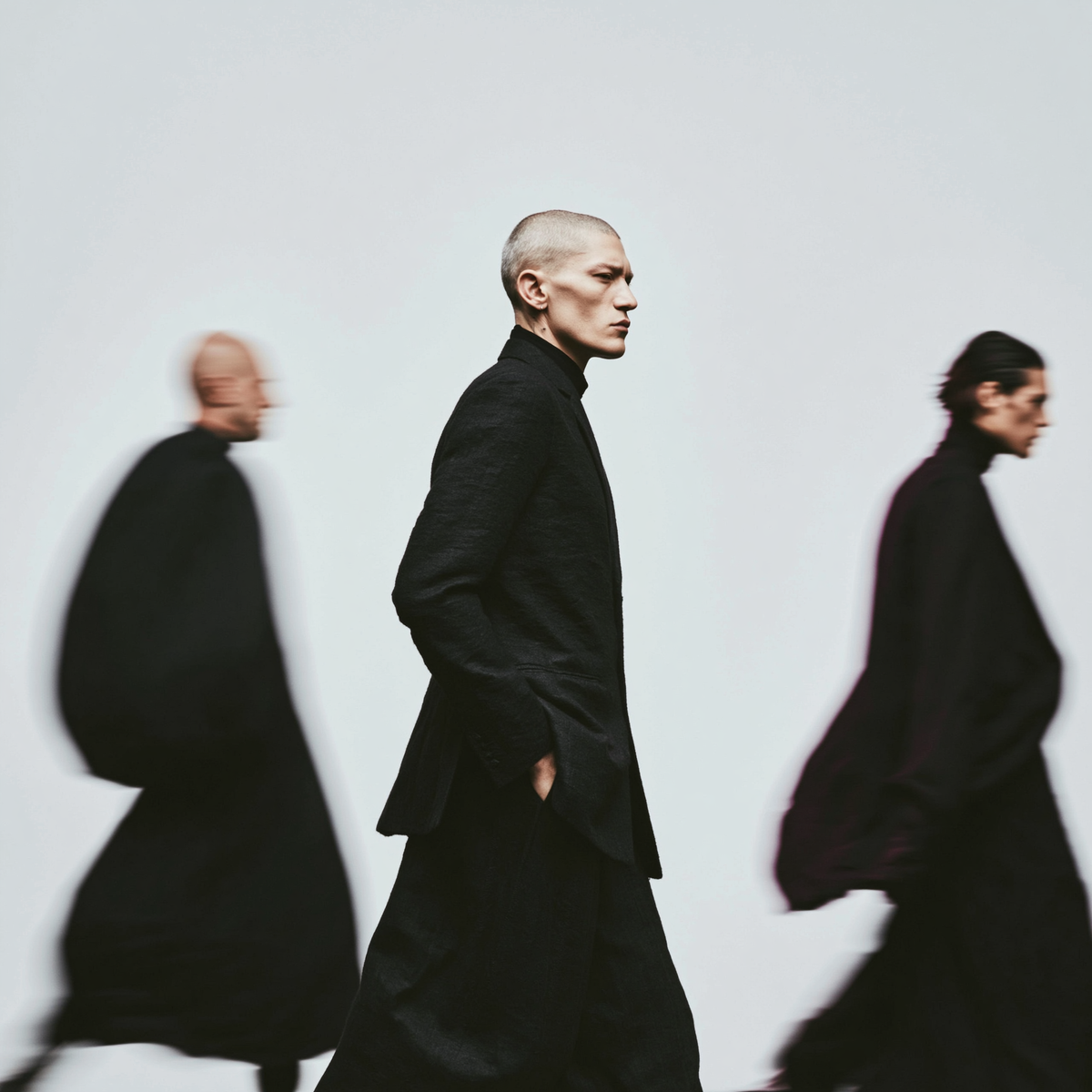
Yohji Yamamoto and Rei Kawakubo, founder of Comme des Garçons, arrived with clothes that rejected everything Paris fashion celebrated. Black wool. Asymmetry. Oversized silhouettes. Raw edges. Clothes that concealed rather than revealed the body.
The Parisian fashion press did not approve. Black, in 1981, was for mourning. Colour was for fashion.
Yohji and Rei made black the conversation.
 Why black?
Both designers kept returning to one idea: when colour steps back, form becomes visible.
For them, colour competes with form. Take it away, and what's left is silhouette, proportion and construction. A black dress doesn't say "look at me". It says "look at how I move".
Over the next forty years, black became the uniform of the creative class: architects, designers, curators, photographers.
 What this has to do with socks
You've done this before. All-black on purpose for work, for an opening, for a meeting where you wanted the room to listen, not look. Same principle. Quiet clothes, loud presence.
But the principle has a cost: repetition. The same outfit every day. The same outfit as your colleagues. The same outfit as everyone else.
Black is a uniform. Uniforms work. Uniforms also disappear into themselves.
Three percent
The question isn't how to escape the uniform. It's how to leave a trace of yourself inside it.
Limono is built on this. You don't have to break the uniform to be visible inside it. You just have to mark it.
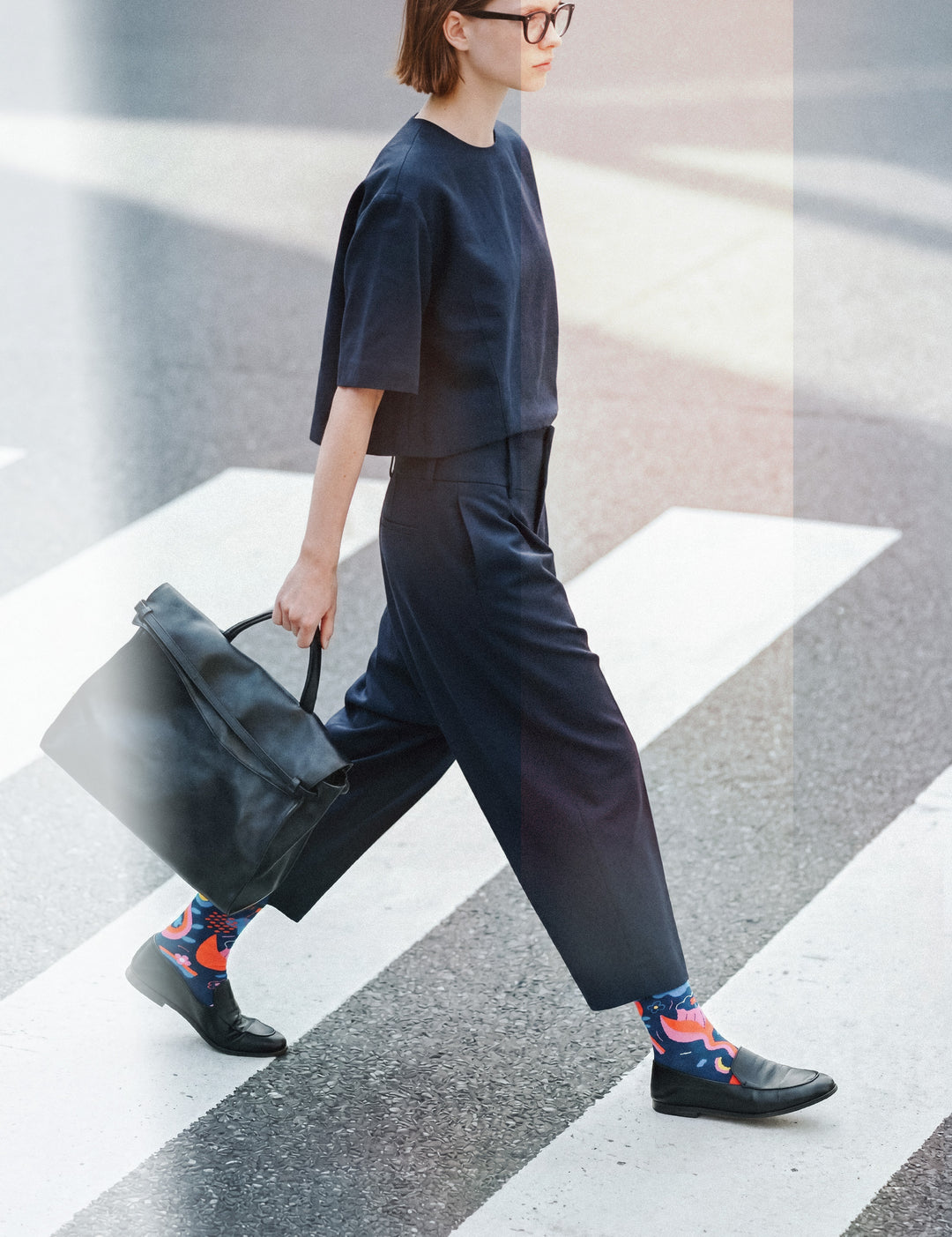
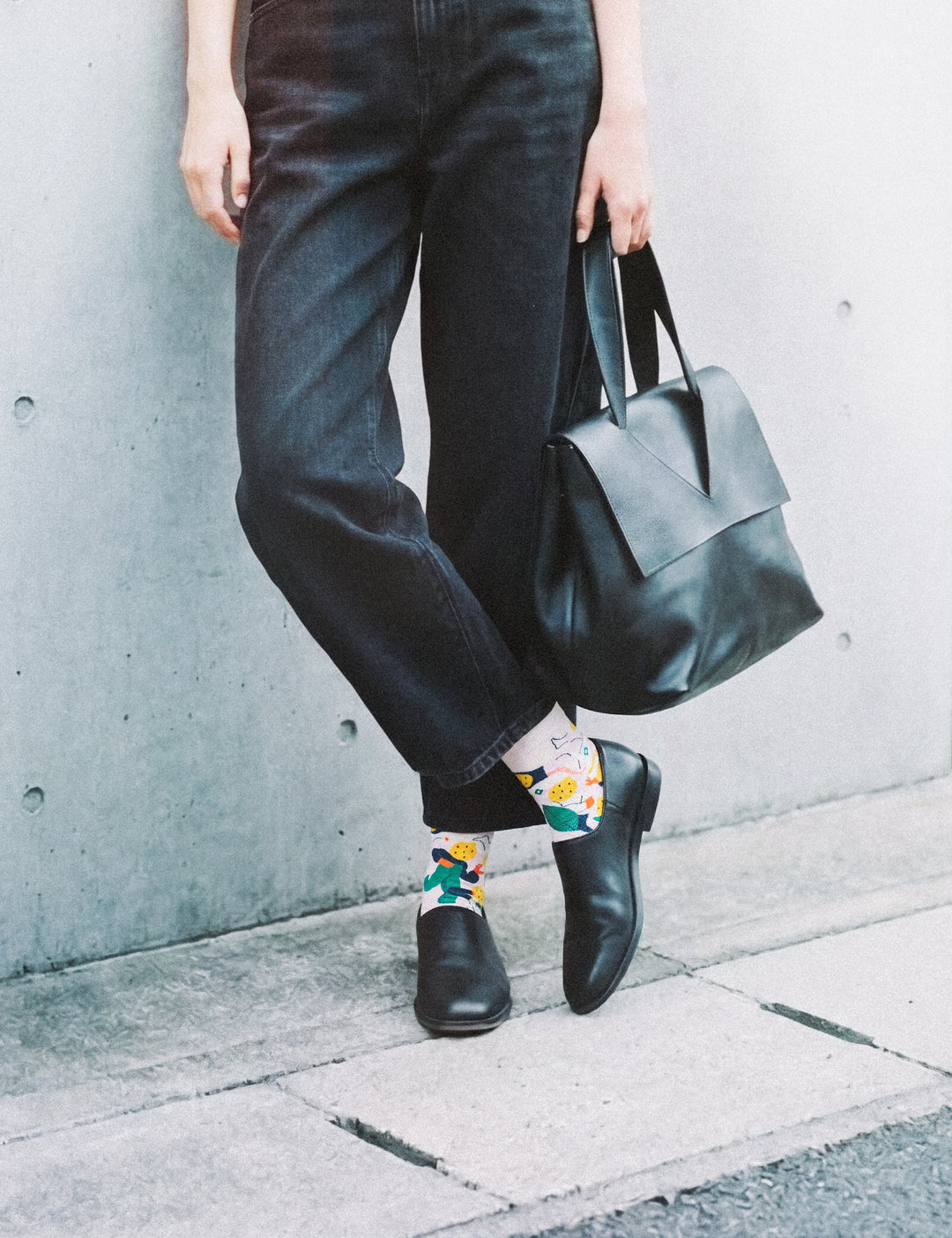
Three percent of your body: the ankle between trouser hem and shoe. Small enough to preserve the silhouette. Big enough for someone paying attention to notice.
Yohji probably wouldn't have approved of every kind of mark on the ankle. A photographic print of a cartoon wouldn't make it far. But a knitted colour, chosen with the same care as the rest of the outfit, is a different conversation.
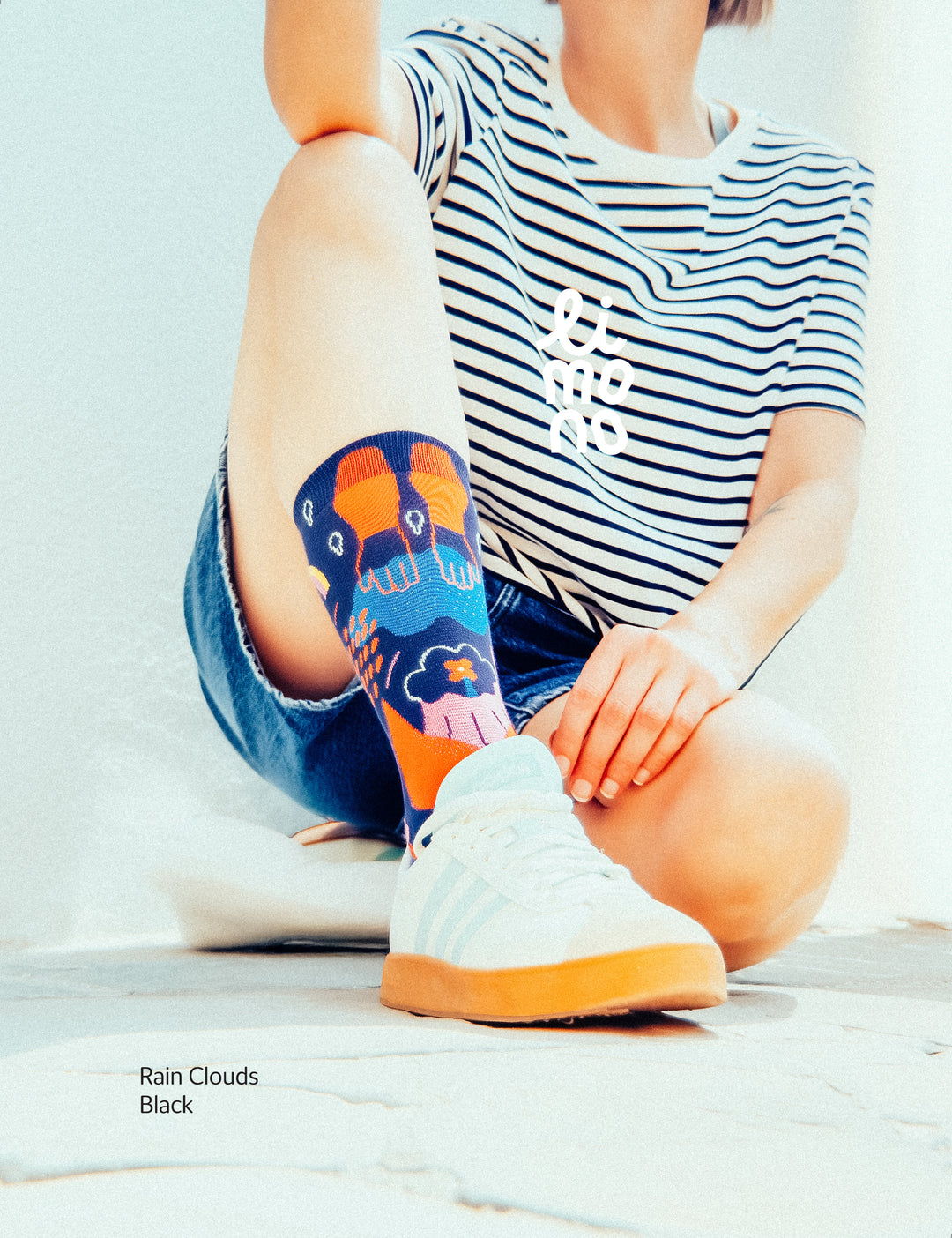
If you wear black and want to stay in that register, our Rain Clouds – Black is exactly that: a dark, considered sock that doesn't break the uniform. It marks it.

The argument from inside the uniform
Limono doesn't add colour back to a black wardrobe. It adds colour on the wardrobe's own terms. Calibrated against the existing palette.
Not everyone wants their socks to tell a story. Sometimes a sentence is enough.
That's what we make. Sentences for ankles. The footnote in your uniform.
Further reading
For a deeper history of black, the colour of monks, judges, intellectuals, rulers and fashion designers, see Black: The History of a Color by Michel Pastoureau.
Or skip the reading and open your closet. Notice what's there. Notice what isn't.
Curious about how our socks are actually made? Read Inside out! — a look at the construction behind the colour.
Shop the Collection
Socks designed to work inside a black wardrobe — not against it.



Share:
Survivorship bias – why you'll never see most of our designs
Aveiro – a city of water and colour